EVERY DAY.
BETTER EQUIPPED.

Useful essentials. Small enough to carry.

Build your own list
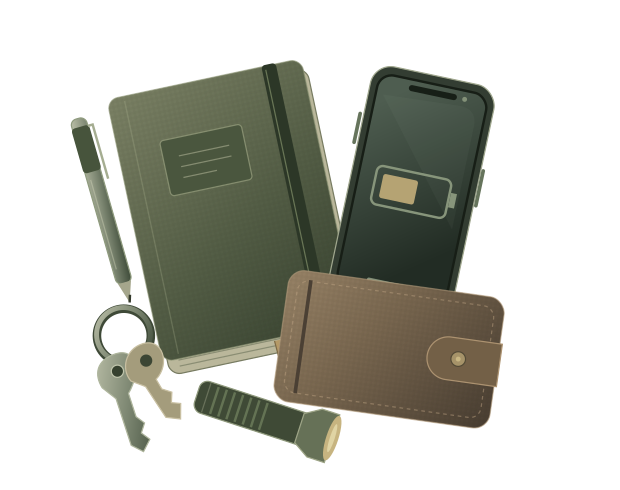
A phone, wallet, notebook, keys, pen and pocket torch
Everyday carry checklist

United Kingdom · 2 people · Light & everyday · Essentials · Standard equipment

People
2

Water

Must-have

Safe water comes first when taps stop working or supplies are disrupted.

Suggested quantity: 2filled bottles
Details

What to look for

A starting reserve, not a full day’s water.

Unopened bottled water or suitable food-grade containers. Store cool, out of sunlight, and check dates.

A portable starting amount, not a day’s water supply. Plan safe refills and carry more where practical.

Baseline amounts are not personalised. Heat, health needs, and pets may require more water; follow local guidance.

Nice-to-have

A reusable bottle is useful where you have a safe place to refill.

Suggested quantity: 2bottles
Details

What to look for

Use a bottle you already own. Fill with safe drinking water before leaving and plan where to refill.

Skip the extra bottle if your filled drinking-water bottles already do the job. An empty bottle is not a water supply or a filter.

Food & cooking

Useful extra

A small reserve makes a long delay easier to manage.

Suggested quantity: 4portions
Details

What to look for

Pick familiar, ready-to-eat snacks and check allergens. These are not a full day’s food supply.

Light & power

Must-have

Reliable light helps you move around safely when the power is out.

Suggested quantity: 2lights
Details

What to look for

Easy controls, common batteries or a reliable charging option, and enough runtime for the intended use.

A torch is safer than a candle. Never use a combustion appliance indoors for light or heat.

Must-have

Keep your phone available for messages, information, and important calls.

Suggested quantity: 1power bank
Details

What to look for

Choose a reputable model compatible with your devices. Check its real usable capacity and keep it charged.

A phone power bank is not automatically suitable for medical equipment. Arrange an appropriate backup with your equipment provider.

Must-have

The right cable makes a backup battery useful.

Suggested quantity: 1compatible cable
Details

What to do

Use an existing cable that fits both your phone and backup power source. Test the complete setup.

Useful extra

Recharge phones and power banks while mains power is available.

Suggested quantity: 1charger
Details

What to look for

Use an existing charger with the correct regional plug, device connector and charging output. Test it with your phone, cable and power bank.

Warmth & shelter

Useful extra

Staying dry matters if your journey takes longer than expected.

Suggested quantity: 2rain layers
Details

What to do

An existing lightweight waterproof layer that fits. Keep it accessible rather than buried at the bottom of a bag.

Useful extra

A delayed journey can expose you to heat and strong sunlight as well as cold.

Suggested quantity: 1personal supply
Details

What to do

Only if relevant: Match supplies to the season, route and individual needs.

Adapt hats, covering clothing, sunglasses and usual sunscreen to the route and season. Include usual appropriate insect protection where needed and account for children and individual skin needs. Plan shade, rest and safe water; equipment never makes dangerous heat safe. Use what you already own rather than a generic clothing or sunscreen tier.

First aid & health

Must-have

Keep basic supplies together for minor injuries.

Suggested quantity: 1kit
Details

What to look for

A clearly organised kit with dressings, plasters, gloves, and basic supplies appropriate to your household. Check expiry dates.

Supplies do not replace first aid training or professional medical care.

Useful extra

Keep trusted instructions usable when your phone has no signal or power.

Suggested quantity: 1reference
Details

What to look for

Include a current regional first aid leaflet, pocket guide or legitimately downloaded offline reference. Check whether your existing first aid kit already includes one. UK: start with St John Ambulance resources; US: use a current recognised local first aid provider. Check the edition, emergency numbers and age-appropriate advice before choosing a book. A free suitable reference is enough.

A guide does not replace training or emergency medical help. Do not attempt procedures beyond your training; follow emergency-service instructions.

Hygiene & sanitation

Must-have

Keep hands clean when normal washing facilities are limited.

Suggested quantity: 1household supply
Details

What to look for

Soap, hand sanitiser where appropriate, wipes, and your usual bathroom essentials. Plan enough for the people and duration selected.

Useful extra

Hand sanitiser alone does not cover basic personal hygiene away from home.

Suggested quantity: 1personal supply set
Details

What to do

Pack small amounts of usual toothbrush/toothpaste, toilet paper, waste bags and any menstrual or continence supplies needed for the journey. Use safe water for toothbrushing. Keep wipes and waste out of toilets and waterways; follow local disposal rules. Home and vehicle bathroom supplies are already a separate row.

Navigation & communication

Must-have

Important numbers should not depend on a charged phone.

Suggested quantity: 1contact card
Details

What to do

Write down trusted contacts, local assistance numbers, and a household meeting point. Keep the card somewhere private, not on this website.

Nice-to-have

Signal for attention without relying on your voice.

Suggested quantity: 1whistle
Details

What to look for

A simple pealess whistle, kept accessible. Check local rules before attaching anything to workplace or school equipment.

Documents & planning

Useful extra

Card terminals and cash machines may not work during an outage.

Suggested quantity: 1household check
Details

What to do

Choose a modest amount suited to your own essential expenses, including smaller denominations. There is no universal required amount.

Useful extra

Write down changing routes, instructions and useful information without a battery.

Suggested quantity: 1notebook
Details

What to look for

Start with a small notebook or paper you own, protected from rain in a suitable bag. A weather-resistant notebook can be useful for repeated outdoor use; check the actual paper specification and packed size. Keep sensitive information private and do not buy a second notebook if an existing one already works.

Useful extra

A writing tool makes paper plans and notes usable away from your phone.

Suggested quantity: 1writing tool
Details

What to look for

Use a protected pencil or reliable pen you already own. Test it on your actual notebook, especially wet or coated paper: water-resistant paper and every type of ink are not automatically compatible. Carry a sensible spare where useful, without a compulsory specialist-pen purchase.

Your household

Useful extra

Keep everyday vision, hearing and communication support available if normal services are disrupted.

Suggested quantity: 1personal supply
Details

What to do

Only if relevant: If you use vision, hearing or communication aids.

If used, include suitable spare prescription glasses, contact-lens supplies and hearing-aid batteries or a compatible charged case. Keep instructions and a way to communicate without relying on hearing or speech alone. Check individual needs with the relevant provider; there is no universal product or quantity here.

Nice-to-have

Keep this kit together so supplies are easy to find and check.

Suggested quantity: 1storage unit
Details

What to look for

Start with a box, organiser or pouch you own. One per kit is a starting point; add space as needed and keep frequently used supplies accessible.

Keep heavy loads manageable. Secure vehicle cargo using suitable restraints; an organiser is not a crash restraint.